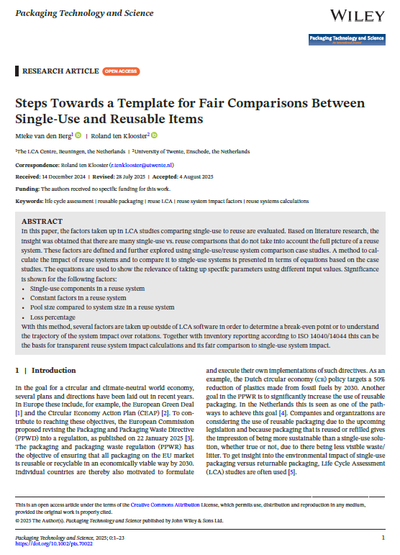
The paper focusses on the factors that should be taken up in LCA studies that compare single-use to reuse systems, and which are often missing in current LCA studies. We believe this discussion is particularly relevant considering the reuse ambitions in the PPWR.
Read MoreYOUR PARTNER IN PACKAGING TECHNOLOGY AND MATERIAL ANALYSIS
Packaging Forensics, Forward Regulatory Insights, and Forensic Life Cycle Assessment
About us
Due to increasing regulatory pressure on packaging, it is becoming ever more important to have a full understanding of its material composition. Likewise, it is imperative to know the composition of packs being compared in life cycle assessment (LCA).
Law enforcement and forensic scientists analyse the packaging of narcotics to identify the source, origin, and supply chain connections of seized drugs. Using many of the same analytical instruments, The LCA Center has developed a method called Packaging Forensics™.
Packaging Forensics™ provides independent, unbiased, scientific insight into the composition of your packaging.
Packaging Forensics™ is the basis of our robust Forensic LCA™ methodology.
The team at The LCA Center is made up of PhD level material scientists with expert knowledge in their specific material fields (fibres, plastics, etc.). Plus, packaging technologists with extensive packaging functionality and conversion knowledge. Together with our packaging forward regulatory insights team, a high level of interpretation and compliance advice are the core offerings of The LCA Center. Leading to robust recommendations and conclusions as regards your packaging.
The LCA Center is an independent research institute. We are material neutral and system agnostic. Our lab is located in The Netherlands, but we operate on a global level. We are a member of the International Association of Packaging Research Institutes (IAPRI) and a partner of the University of Twente Packaging Chair. The LCA Center is part of OptiGroup.
If you require to know more about the composition, functionality and environmental impact of your packaging, please read further.
Supported Languages:
English, Dutch, French, German, Spanish, Mandarin
Law enforcement and forensic scientists analyse the packaging of narcotics to identify the source, origin, and supply chain connections of seized drugs. Using many of the same analytical instruments, The LCA Center has developed a method called Packaging Forensics™.
Packaging Forensics™ provides independent, unbiased, scientific insight into the composition of your packaging.
Packaging Forensics™ is the basis of our robust Forensic LCA™ methodology.
The team at The LCA Center is made up of PhD level material scientists with expert knowledge in their specific material fields (fibres, plastics, etc.). Plus, packaging technologists with extensive packaging functionality and conversion knowledge. Together with our packaging forward regulatory insights team, a high level of interpretation and compliance advice are the core offerings of The LCA Center. Leading to robust recommendations and conclusions as regards your packaging.
The LCA Center is an independent research institute. We are material neutral and system agnostic. Our lab is located in The Netherlands, but we operate on a global level. We are a member of the International Association of Packaging Research Institutes (IAPRI) and a partner of the University of Twente Packaging Chair. The LCA Center is part of OptiGroup.
If you require to know more about the composition, functionality and environmental impact of your packaging, please read further.
Supported Languages:
English, Dutch, French, German, Spanish, Mandarin

Packaging Forensics
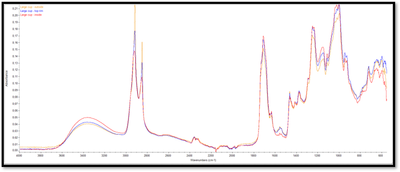
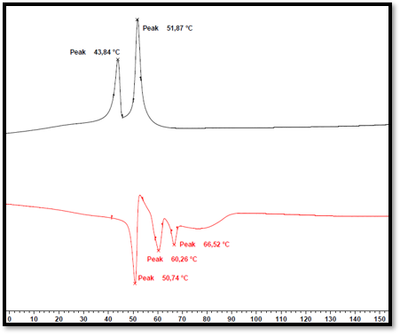
The type of services we offer include the following :
- Testing for plastic content: Lab analysis of a product or material for plastic content, based on the SUPD definition.
- Testing for presence of other specific components in a product or material:
- Lab analysis of your product to search for a specific component. For example: EVOH in multilayer films, BPA in coatings, etc.
- Let us know what you are looking for so we can perform a targeted analysis. - Non-specific material analysis: Simply want to know “what is this material”? We’ve got you covered. We have a comprehensive range of analytical instruments so we can go all the way from a simple check to an in-depth study, depending on your wishes.
- Functionality testing: We offer a broad variety of functionality tests to analyse if a product performs according to its specifications or is fit for a specific application.
- Claim verification: Want to verify if a (green) claim is correct, or do you want to formulate your own claim? We help you to check if all requirements are met and if the claim can be substantiated.
- Support with complaints or credit notes: Got a complaint or credit note situation? We can help identify the source of the problem and who should raise the credit note.
- Support with packaging (eco) innovation: Want to increase your packaging performance and/or decrease its environmental impact? We are well-equipped to help you with technical support and analyse and improve your (new) packaging products and innovations.
Forensic LCA
Forensic LCA™ was developed to address the issue of credibility in comparative LCA studies for which one pack would have associated process data while the other pack, typically from a competitor, would not have such data. By subjecting both packs to the Forensic LCA™ method, a more robust and credible LCA is achievable.
Additionally, one of the biggest critiques of LCA is the lack of “technologically relevant knowledge”. This has led to the EU stating “Life Cycle Assessment (LCA) related tasks […] and task related to method and data development for substantiating green claims requires specialised technical/scientific knowledge with scientific PhD-level education and years of experience in the field.” Similar statements are also to be found in documentation related to LCA from various USA States EPR rules. The LCA Center addresses this matter by employing experts that meet these criteria.
The types of LCA services we offer include the following:
Additionally, one of the biggest critiques of LCA is the lack of “technologically relevant knowledge”. This has led to the EU stating “Life Cycle Assessment (LCA) related tasks […] and task related to method and data development for substantiating green claims requires specialised technical/scientific knowledge with scientific PhD-level education and years of experience in the field.” Similar statements are also to be found in documentation related to LCA from various USA States EPR rules. The LCA Center addresses this matter by employing experts that meet these criteria.
The types of LCA services we offer include the following:
- Quick-scan LCA:
- Provides an indicative (comparative) environmental impact.
- Quick-scan results cannot be used for external communication or claims. - Full study LCA (with external peer review):
- Includes a full forensic material analysis of all products.
- Suited for external communication and substantiation of claims (third-party peer review required).
- Compliant with ISO 14040/14044. - LCA peer review:
- Have your LCA peer reviewed by us.
- Compliant with ISO 14071:2024. - LCA interpretation:
- LCAs can be long and difficult documents. If you have a supplier's LCA study and need help with the interpretation, we can help.
Forward Regulatory Insight
One of the major drivers of packaging change is regulation. Having insight into these regulations, and the trajectory of future regulations, is vital when making recommendations based on Packaging Forensics™ and Forensic LCA™.
The LCA Center Regulatory Team consists of a packaging regulatory scientist and lawyer. Together they monitor developments in EU packaging-related regulations through their network of Brussels based NGO, lobbyists, policy makers and consultants to these policy makers.
Our Forward Regulatory Insights team provide support for our studies as well as a regular newsletter on packaging-related regulatory insights and developments in Brussels. They also monitor and track relevant developments across EU member states and the UK.
The LCA Center Regulatory Team consists of a packaging regulatory scientist and lawyer. Together they monitor developments in EU packaging-related regulations through their network of Brussels based NGO, lobbyists, policy makers and consultants to these policy makers.
Our Forward Regulatory Insights team provide support for our studies as well as a regular newsletter on packaging-related regulatory insights and developments in Brussels. They also monitor and track relevant developments across EU member states and the UK.
Our Team
ir. Loek Waegemaekers
Sr. Packaging TechnologistExpertise: Packaging Technology, Conversion, Material Analysis, Life Cycle Assessment
Dr Alan Campbell
Packaging TechnologistExpertise: Life Cycle Assessment, Packaging Materials and Conversion Process Analysis
Dr Sybren Schoustra
Packaging TechnologistExpertise: Material Analysis, Polymers & Plastics, Chemistry, Life Cycle Assessment
Dr Naycari Forfora
Packaging TechnologistExpertise: Life Cycle Assessment, Cellulosic Materials & Fibres, Material Analysis
Diana Schiffer, MSc
Packaging Regulatory AdvisorExpertise: Environmental Legislation, Policy Analysis, Policy Communication
Qianhan Chen, LL.M.
Packaging Regulatory AdvisorExpertise: International Trade Law, Packaging Compliance, EPR Governance
Clients that trust our expertise
Case Studies

In samenwerking met Natuur & Milieu is bijgevoegd rapport over To-Go verpakkingen opgesteld. The LCA Center heeft voor het merendeel van de producten de materiaalsamenstelling bepaald.
Read More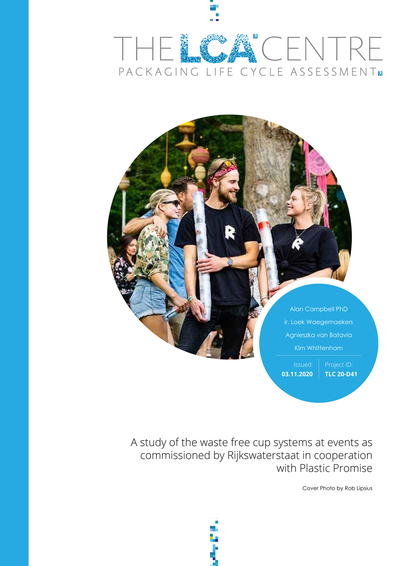
In opdracht van Rijkswaterstaat, en in samenwerking met Plastic Promise, heeft The LCA Center onderzoek gedaan naar de milieu-impact van de huidige afvalvrije bekersystemen op festivals. Uit het onderzoek komt geen ‘winnaar’ naar voren.
Read More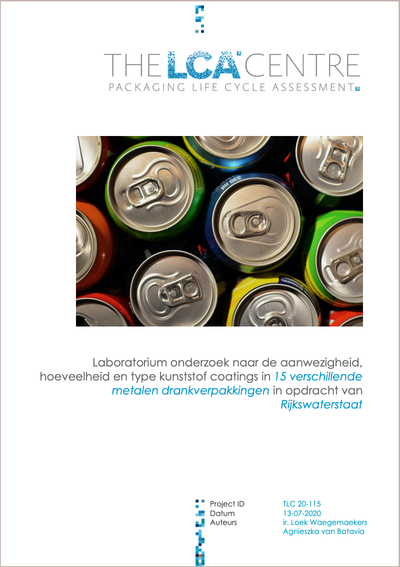
We researched the presence of plastic coatings in 15 of the most littered metal cans for the Rijkswaterstaat (Dutch Department of Waterways and Public Works).
Read More
Contact Us
- Zilverwerf 17, Beuningen, Nederland